Dr. Gymbro
←

#concurrent training

1 article
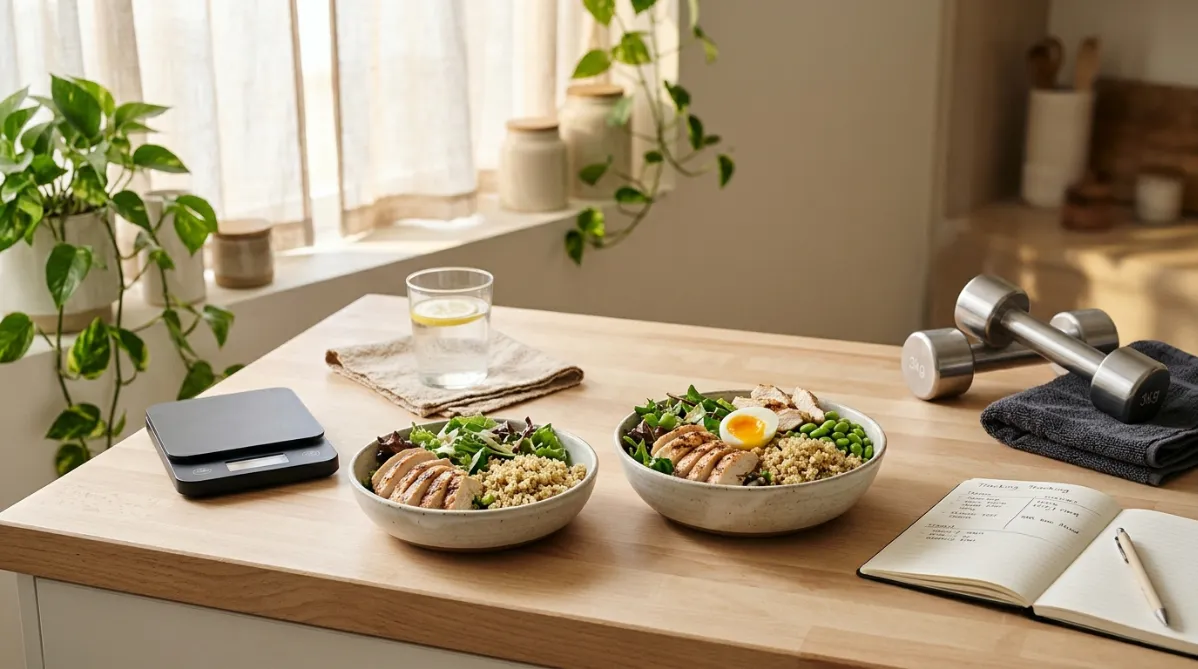
A wide landscape editorial photograph of a clean, sunlit kitchen counter in soft natural morning light, styled like a modern wellness journal cover. In the foreground, two matching ceramic bowls sit side by side on a pale oak butcher block. The left bowl holds a modest portion of sliced grilled chicken breast, quinoa, and greens. The right bowl holds a noticeably larger, double-sized portion of the same ingredients, with extra chicken, a soft-boiled egg, and edamame. The contrast in portion size is clear but elegant. Beside the bowls are a matte black digital kitchen scale, a tall glass of water with a lemon slice, and a small linen napkin in warm oatmeal tone. A pair of sleek brushed-steel dumbbells rests slightly out of focus on the counter's edge, and a folded charcoal gym towel sits next to them. In the soft-focus background, a large window with sheer curtains lets in diffused golden light, and a trailing green pothos plant adds an organic touch. A small, minimal notebook with a pen lies open to the side, suggesting careful tracking. The color palette is muted and cohesive: warm creams, sage green, soft terracotta, charcoal, and natural wood. Shallow depth of field, crisp focus on the bowls, gentle shadows, and subtle film-like grain. Composition follows the rule of thirds with generous negative space on the upper right for headline text. The mood is calm, thoughtful, and trustworthy, like a contemporary health and science magazine feature. There are no people, no text, and no futuristic elements.
nutrition

Proteine 3,2 g/kg per 16 settimane: hanno danneggiato i reni dei sollevatori?

BY DR. GYMBRO ·

Stai assumendo il doppio delle proteine consigliate per i sollevatori e ti chiedi se rischi di danneggiare i reni? Uno studio randomizzato di 16 settimane su 44 uomini allenati ha confrontato 3,2 g/kg di proteine con 1,6 g/kg. Non sono emerse differenze statisticamente significative nei marcatori renali, né nei soggetti che si allenavano solo con i pesi né in quelli che combinavano sollevamento e cardio. Tuttavia, i gruppi ad alto contenuto proteico hanno mostrato lievi aumenti di BUN e di cystatina C e una riduzione dell’eGFR, risultati descritti dagli autori come puramente descrittivi. Ecco cosa significa, cosa lo studio non può dirti e a chi conviene stare più attenti.

This page is available in